


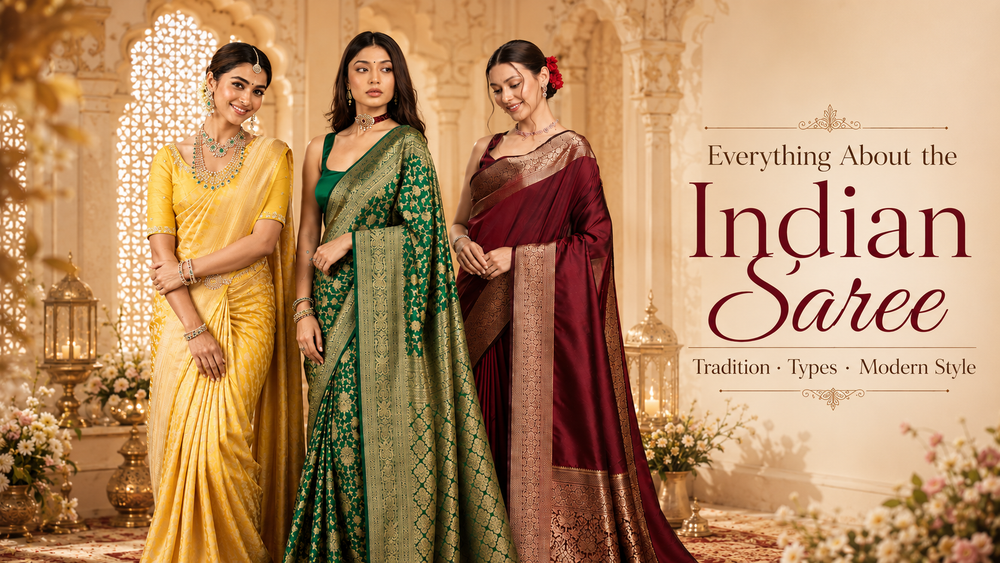
Everything About the Indian Saree Tradition Types and Modern Style
by Rushita Usadadiya
You know what is remarkable? The saree you wear to a wedding today is essentially the same drape women wore 5,000 years ago during the Indus Valley Civilization, one of the oldest urban cultures in human history. No stitching, no cutting, nothing added . Just fabric draped the way your mother showed you, the way her mother showed her. Every fashion trend you have followed has already expired. The saree was never following trends to begin with. The saree was never really about fashion. It is how India carries its story forward. A saree means something different in every home you walk into. Different fabric, different drape, different story. But no matter how different those stories are, wearing one always feels like coming back to something familiar. You don't need a big reason for it either. Weddings, festivals, office functions, international stages, a saree fits all of it without trying too hard.
The year is 2026 and the saree is having its biggest moment yet. Isha Ambani proved that on 4 May 2026 at the Met Gala, arriving in a handwoven gold tissue saree crafted by Swadesh artisans with borders hand painted in pichwai motifs drawn from the ancient Ajanta frescoes. That look did not just turn heads, it became one of the most talked about met gala looks of the entire evening. The evening's theme was Fashion is Art. She wore a saree and answered the brief better than anyone else in the room. That moment was not just about one outfit or one of the most iconic met gala looks of recent memory. It was five millennia of Indian tradition standing confidently on a global stage and owning every second of it.
Fabrics to Choose in Saree for Women at IBISfab
The fabric you choose decides everything the drape, the comfort, the occasion and how you feel six hours into wearing it. Get the fabric right and everything else falls into place.
Jacquard Saree
What makes a jacquard saree special is that the pattern is not printed on the fabric, it is built into it. That one difference changes everything. The texture has a natural depth, the surface catches light beautifully and the whole saree has a richness that looks expensive without feeling heavy to wear. For festivals, family functions and afternoon celebrations, it is one of the most reached for fancy sarees right now because it gives you a dressed up look with none of the discomfort.
Soft Silk Saree
There is a reason so many women who love silk end up reaching for soft silk sarees more often. Pure silk has its moments but it can feel stiff and unforgiving through a long evening. Soft silk keeps the shine and drops the struggle. It drapes beautifully, feels comfortable against the skin and is perfect for everything from a quiet puja ceremony to a full family gathering or evening event.
Cotton Silk Sarees
Some sarees are beautiful but exhausting to wear all day. Some are comfortable but look too plain for a real occasion. Cotton silk sarees sit right between the two. The cotton keeps the fabric light and breathable and the silk blend gives it that warm glow that reads festive without overdoing it. Every season, every occasion, every kind of woman, cotton silk sarees work for all of it which is exactly why they are one of the most popular trending sarees right now.
Banarasi Soft Silk Saree
Some sarees are beautiful. A banarasi soft silk saree is an heirloom. Woven in Varanasi since the Mughal era of the 14th century, the weavers of Banaras absorbed Persian floral motifs, gold zari techniques and intricate geometric patterns into their own craft and created something the world had never seen before. The soft silk saree version carries the same heritage and the same real zari work but in a lighter, more wearable form that is comfortable for long events. Depending on the quality of the silk and the weight of the real gold or silver zari, a banarasi silk saree ranges from premium to high luxury. Most families treat these as treasures, passing them from mother to daughter for generations.
Occasion-Based Saree Types
Not every saree fits every moment. Knowing which one to reach for saves you time and makes sure you always look exactly right for the occasion.
Daily Wear Saree
The best daily wear saree is the one you do not have to think about. Lightweight cotton, simple prints and cotton silk sarees are exactly that. Quick to drape in the morning, comfortable through the longest days and always looking put together without any extra effort involved. The best plain sarees in soft solid colours are also a timeless choice for everyday wear.
Party Wear Saree
Party wear sarees are for the moments when you want to walk into a room and be noticed. Rich fabrics, modern blouses, bold colours and a little shimmer are what make party wear sarees for wedding receptions and evening functions work. Style the blouse well and the saree does the rest of the talking for you.
Wedding Wear Saree
A saree for wedding occasions is about making a memory that lasts. Banarasi silk sarees, Kanjivaram and heavily embroidered pieces in deep jewel tones like maroon, navy and forest green are the classics that end up in photographs families keep for decades.
Festival Saree
Festivals are the one time you can go all out and nobody will tell you it is too much. Jacquard sarees, printed silk blends and cotton silk sarees in saffron, emerald and royal blue are exactly what Navratri, Diwali and Dussehra were made for. These are the fancy sarees that sit in your wardrobe all year waiting for this moment and when that moment comes they never disappoint.
Casual Saree
Some days call for something simple. A lightweight plain saree in a soft pastel or quiet print, nothing more. It drapes in minutes, feels easy through the day and still looks like you made an effort even when you really did not.
Yellow Saree for Haldi
One rule for a yellow saree for haldi: go as yellow as possible. Bright turmeric, warm mustard, soft butter tones all of them photograph beautifully and match the joy of the occasion. Cotton and georgette are the best fabric choices since a haldi ceremony is cheerful, messy and wonderful all at once.
How the Indian Saree Became a Global Fashion Statement
The saree has quietly crossed every border there is. When Gigi Hadid, one of the most recognised faces in Western fashion, chose to wear Indian textile at the NMACC Gala in 2023, it said more than any campaign or runway show ever could. From met gala looks to international film festivals, the saree is showing up everywhere the world is watching. And it is not showing up to impress anyone. It is showing up because it belongs.
Aishwarya Rai has carried the silk saree onto international stages for years with a grace the world consistently stops to admire. Sonam Kapoor has used global red carpets to showcase Indian designers and traditional weaves in ways that feel both proud and contemporary. At the 79th Cannes Film Festival 2026, Alia Bhatt wore a custom couture saree blending Victorian romance with Indian draping traditions a corseted silhouette with sculpted draping and a sweeping train that became one of the most talked-about looks on the entire red carpet.
Modern brides are following this same energy with saree gowns, pre-stitched drapes and bold contemporary blouse designs because today is woman does not choose between tradition and modernity. She wears both at the same time.
FAQs
1. I want to buy a banarasi soft silk saree but how do I know if it is genuine?
Before you buy a banarasi soft silk saree, flip it over. A genuine one will show real zari on both sides of the weave, not just the surface. The motifs will be precise and consistent and the saree will feel heavier than you expect even in the soft silk version because real gold or silver zari has actual weight to it. A very low price on something claiming to be authentic Banarasi is almost always a red flag. Ask the seller straight out about the fabric composition and zari quality and do not skip that conversation.
2. I have a wedding to attend and want to wear a party wear saree. How do I style it right?
Here is the honest truth about party wear sarees for wedding functions. The saree gets you halfway there. The blouse gets you the rest of the way. Even a plain soft silk saree or cotton silk saree can turn heads with the right blouse design, whether that is a contrast colour, a modern cut or some embellishment. Match your jewellery to the saree, minimal if it is busy, bold if it is plain. One last thing, pin your pallu before you walk in and actually enjoy the night.
3. What colour and fabric should I pick for a yellow saree for haldi?
Haldi is messy, joyful and over before you know it so dress accordingly. A yellow saree for haldi works best in turmeric, mustard or bright yellow shades. Cotton and georgette are your safest choices, light on the body and easy to move in. A simple floral print or a plain solid yellow is all you need. Your good sarees can sit this one out.
4. Which type of saree is best for daily wear?
The best daily wear sarees are the ones you forget you are wearing. Lightweight cotton, cotton silk sarees and simple printed sarees do exactly that. They go on quickly in the morning, feel breathable through the whole day and come in enough colours and designs to keep things interesting without ever making you think too hard about what to wear.