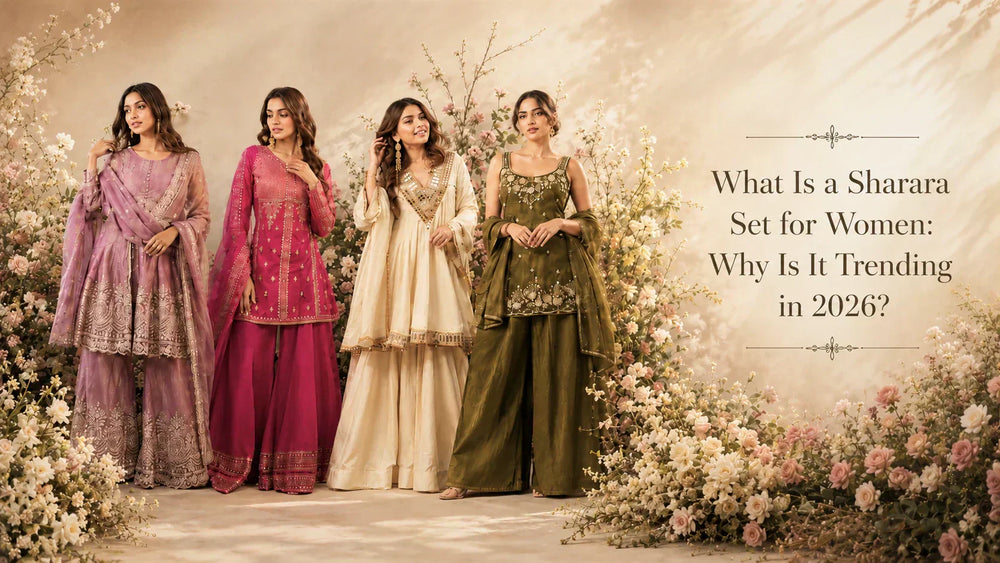
10 Latest Peplum Sharara Set Designs for Weddings & Festive Occasions
Choosing a wedding outfit sounds exciting until you have to find something that looks festive, feels comfortable and still lets you enjoy the whole function.
That is why the peplum sharara set works so well for weddings and festive occasions. It gives you the shape and drama of a dressed-up ethnic look, with the easy movement of flared sharara pants. From mehndi and sangeet to engagements, weddings and festive dinners, the style fits naturally into different celebrations. Current wedding fashion is also embracing peplum silhouettes, pastels, jewel tones and embellished shararas.
The real question is not whether a sharara looks good. It is which style feels right for your occasion and personal style.
Here are 10 sharara designs worth considering for your next celebration.
Why Peplum Shararas Work So Well for Wedding Functions
A peplum sharara gives you the festive feel of a fuller Indian outfit while still being easy to move in.
The peplum shape creates definition around the upper body, while the wider sharara brings movement to the look. This balance works beautifully when you want something more dressed up than a regular kurta set but do not want the weight of a heavily layered lehenga.
It also makes sense for Indian wedding functions where you may be sitting during one part of the celebration and dancing during the next.
A lighter sharara set can work for a mehndi or daytime event, while silk, sequins, zari and richer embroidery can make the same silhouette feel right for a wedding, engagement or reception.
10 Latest Peplum Sharara Set Designs to Try
The right sharara can completely change how comfortable and confident you feel at a wedding or festive function. From embroidered peplum styles to Bandhani, pastels and silk, here are 10 looks to help you find one that suits your occasion and personal style.
1. Embroidered Peplum Sharara for the Main Wedding Function

Maroon Simmer Silk Embroidered Sharara Set
If you want your sharara to feel properly wedding ready, start with embroidery.
An embroidered peplum style top paired with a flowing sharara gives you enough detail to look dressed for the occasion without making the outfit feel too bulky.
Deep shades such as maroon, wine and bottle green work especially well for evening weddings and engagement ceremonies. Sequin details around the neckline can add just enough shine when the rest of the embroidery already carries the look.
2. Bandhani Sharara for a Colourful Mehndi Look
Royal Blue Bandhani Sharara Set
A mehndi outfit should feel festive, but it also needs to let you enjoy the function.
Bandhani works beautifully here because the print brings colour and traditional character without depending completely on heavy embellishment.
Royal blue, rani pink, red and green are especially easy to style for a mehndi or family celebration. Pair them with jhumkas, comfortable juttis and a light dupatta so you are not constantly adjusting your outfit.
A Bandhani sharara is also a nice choice if you like traditional Indian patterns but want a silhouette that feels younger and easier to move in.
3. Sequin and Zari Sharara for Sangeet Night
Mehndi Green Embroidered Sharara Set
A sangeet outfit has one important job beyond looking good. It needs to move with you.
Sequins and zari work naturally suit evening events because the detailing catches the light while you dance. A flared sharara also gives you more freedom than a fitted skirt or very heavy lehenga.
A bright green, emerald, wine or navy set can work beautifully for the evening. Contrasting dupattas can also make the outfit feel more playful without adding extra jewellery.
If the top already has heavy sequin and zari work, avoid wearing a large necklace over it. Statement earrings or chandbalis usually give the outfit enough finish.
4. Pastel Organza Sharara for a Day Wedding

Not every wedding outfit needs a deep jewel tone.
For a daytime ceremony, pastel colours can feel softer and more refreshing. Mint, blush pink, peach, lavender and powder blue work particularly well in natural daylight.
Organza adds a slightly structured finish, so the outfit still feels occasion ready even when the colours are subtle. Light zari, sequins or gota work can add detail without overpowering the pastel base.
Choose this style if you want a softer wedding look that still feels festive in daylight.
5. Silk Embroidered Sharara for Festive Celebrations

Some occasions call for an outfit that feels richer without looking overly bridal.
This is where a silk embroidered sharara works well.
Silk adds natural richness to the outfit, while embroidery gives it enough occasion value for festive dinners, family weddings and celebrations such as Diwali or Eid.
Purple, royal blue, maroon and deep green are strong choices when you want something traditional but not predictable.
If the fabric already has a beautiful texture and sheen, you do not need to add too many accessories. It is a good choice when you want something rich enough for a celebration but still easy to wear again.
6. Cream Chinon Silk Sharara for an Elegant Wedding Look
If bright colours are not really your style, a cream or ivory sharara can look just as festive.
Chinon silk has a soft fall that works nicely with a flowing sharara silhouette. Add delicate embroidery and the outfit begins to feel polished without becoming loud.
Cream, ivory and soft beige also give you more freedom with jewellery. You can keep the look subtle with pearls or add colour through emerald, ruby or kundan pieces.
This kind of sharara works especially well when the wedding has an elegant or softer colour palette.
7. Mustard Sharara for Haldi and Pre Wedding Functions
Mustard Yellow Embroidered Sharara Set
Haldi is one function where you can have more fun with colour.
Mustard and warm yellow shades naturally feel right for the ceremony and photograph beautifully alongside marigold decor, floral jewellery and bright daytime settings.
Instead of choosing something extremely heavy, look for a sharara with a comfortable short kurti and lighter embroidery. You will probably be moving around, sitting, taking pictures and, depending on the family, getting a little haldi on the outfit too.
Choose it when you want your haldi look to feel festive, comfortable and easy to move in.
8. Multicolour Ruffle Sharara for a Fun Festive Look
Multicolour Georgette Ruffle Sharara Set
If you are tired of choosing between pink, green and purple, why not wear all three?
A multicolour sharara can feel playful and lively, especially for festive parties where you do not need the formality of a full wedding outfit.
Ruffle details add movement to the sharara and give it a slightly more youthful feel. Georgette works well for this style because it keeps the flare soft instead of making the outfit look stiff.
It works best when you want your festive wear outfit to feel playful rather than formal.
9. Ivory Embroidered Sharara for Reception
A reception outfit does not always have to mean dark colours and heavy sparkle.
Ivory can look beautiful in the evening when paired with textured embroidery, sequins or an embellished dupatta.
It creates a cleaner look that works particularly well if you prefer understated occasion wear. You can then add colour through your jewellery, lipstick, clutch or footwear.
A good choice if you prefer a cleaner reception look over heavy colours and sparkle.
10. Dusty Rose Sharara for Wedding Guests and Engagements
Dusty Rose Embroidered Sharara Set
Wedding guests often face a difficult balance.
You want to look properly dressed for the celebration, but you do not want your outfit to feel bridal or overly heavy.
Dusty rose solves that problem beautifully.
The colour feels softer than bright pink while still giving you enough warmth for a wedding setting. Pair it with embroidery or sequin details and it becomes an easy choice for engagements, receptions and wedding guest looks.
It is an easy option for wedding guests who want something elegant without looking overdone.
Which Sharara Style Works Best for Each Wedding Function?
If you are choosing an outfit for one specific function, start with what you will actually be doing there.
|
Function |
Sharara Style to Consider |
Colour Direction |
Why It Works |
|
Haldi |
Mustard or light embroidered sharara |
Yellow, mustard, orange |
Bright, comfortable and suited to daytime celebrations |
|
Mehndi |
Bandhani or colourful sharara |
Green, pink, blue |
Festive without feeling too formal |
|
Sangeet |
Sequin or zari sharara |
Emerald, wine, navy |
Works beautifully under evening lights and allows movement |
|
Engagement |
Pastel or embroidered style |
Blush, mint, lavender |
Elegant without looking overly bridal |
|
Wedding |
Silk or richly embroidered sharara |
Maroon, red, deep green |
Gives the outfit a more traditional and formal finish |
|
Reception |
Ivory or elegant contemporary sharara |
Ivory, wine, muted tones |
Polished enough for an evening event |
|
Diwali |
Silk, Bandhani or embroidered sharara |
Red, blue, green, pink |
Easy to dress up with traditional accessories |
How to Choose the Right Peplum Sharara Set
A beautiful outfit should not only look good, but also feel right for the function.
Choose the Peplum Length Carefully
- Keep the peplum and sharara balanced so the outfit does not look too bulky.
- Choose a shorter peplum if the sharara has more flare.
- Check the actual measurements instead of relying only on model photos.
- Consider your height and footwear before finalising the length.
Pick the Fabric According to the Function
- Choose georgette for lighter movement and dancing.
- Pick organza for a more structured daytime look.
- Go for silk or silk blends for weddings and festive events.
- Choose Chanderi or lighter silk when you want a festive look without too much weight.
Match the Embellishment to the Occasion
- Choose lighter embroidery or gota for daytime functions.
- Pick sequins or zari for sangeet and evening events.
- Go for richer embroidery for the main wedding function.
- Keep jewellery simple if the outfit already has heavy detailing.
Consider Comfort and Movement
- Check the waistband, lining and dupatta weight before buying.
- Make sure the sleeves and sharara length allow easy movement.
- Choose footwear that works with the final hem length.
- Make sure you can sit, walk and dance comfortably without adjusting the outfit all evening.
The right sharara should help you enjoy the celebration, not distract you from it.
How to Style a Peplum Sharara Set
A peplum sharara already has plenty of shape and detail, so the best styling comes from knowing when to keep things simple.
1. Jewellery
Start with the neckline and let the outfit decide how much jewellery you really need.
- Heavy embroidery: Choose statement earrings such as jhumkas, chandbalis or kundan drops.
- Simple neckline: Add a choker or traditional necklace for a more finished look.
- Pastel sharara: Pearls or lighter stone jewellery keep the outfit soft and elegant.
-
Silk or zari styles: Traditional kundan pieces work naturally with the richer finish.
2. Footwear
The right footwear should look good without making the sharara difficult to carry.
- Mehndi or haldi: Juttis and mojaris are comfortable and easy to move in.
- Reception or evening event: Block heels or metallic sandals can make the outfit feel more polished.
-
Before the function: Try the footwear with your sharara so the hem falls at the right length.
3. Dupatta Draping
Keep the dupatta secure enough that you can enjoy the function without constantly fixing it.
- For dancing: Pin it neatly over one shoulder.
- For weddings: A soft side drape or free flowing style can look more formal.
- For a peplum top: Avoid covering the whole waist so the shape of the outfit stays visible.
-
Most important: Choose a drape that feels comfortable for the full event.
4. Hair and Makeup
Your hairstyle should complement the neckline instead of hiding the best part of the outfit.
- Heavy embroidered sharara: Try a sleek bun or pinned back hairstyle.
- Pastel or lighter styles: Soft waves, curls or a half up look work beautifully.
- Need more ideas? Explore our best hairstyles for a sharara suit for wedding and festive styling inspiration.
- Makeup: Keep daytime looks softer, and add more definition for sangeet, receptions and evening functions.
Peplum Sharara vs Lehenga: Which Is Better for a Wedding Guest?
There is no one correct answer. It depends on the kind of wedding guest you want to be.
|
Peplum Sharara |
Lehenga |
|
Easier to move in |
Creates a fuller traditional look |
|
Trouser based silhouette |
Skirt based silhouette |
|
Comfortable for dancing |
Often more formal |
|
Easy choice for guests and bridesmaids |
Popular for grand wedding looks |
|
Can be easier to rewear |
May feel more occasion specific |
If you expect to move between ceremonies, greet relatives, dance and stay at the venue for hours, a sharara can be the easier option.
A lehenga may suit you better when you want more volume or a very traditional wedding look.
For wedding guests, bridesmaids and sisters of the bride or groom, a sharara often sits nicely between a regular suit and a full lehenga.
How to Buy a Peplum Sharara Set Online
Online shopping becomes much easier when you know exactly what to check before adding an outfit to your cart.
-
Check the Size Chart
Do not choose your size only because it is the size you usually wear.
Check the actual measurements for:
-
- bust
- waist
- hips
- top length
- sharara length
Brand sizing can vary, and embroidered fabrics may have less give than everyday kurtas.
-
Check the Fabric and Lining
The fabric tells you how the outfit is likely to fall.
The lining tells you how comfortable and wearable it will actually be.
This matters especially with organza, georgette and lighter shades such as cream, pastel pink and ivory.
-
Look Closely at the Embroidery
Zoom into the product images.
Check whether the design uses thread embroidery, sequins, zari, gota, printed details or a combination of different techniques.
Knowing what creates the visual effect will help you understand whether the outfit suits the occasion you are buying it for.
-
Check What Comes With the Set
Do not assume every listing includes three pieces.
Confirm whether you are receiving:
top + sharara + dupatta
Also check whether the dupatta shown in the photos is actually included.
-
Think About Alterations Before the Event
Sharara length is one of the easiest details to overlook.
If you plan to wear heels, take that into account before altering the bottom.
Try the complete outfit with your wedding footwear rather than measuring it barefoot.
FAQs
Q. Are peplum sharara sets still in style?
Yes. Peplum tops continue to work well with sharara bottoms because the fitted or flared upper silhouette balances the volume of the pants. Embroidered, pastel, silk and lighter occasion styles also give you plenty of options beyond one specific trend.
Q. Can I wear a peplum sharara set to a wedding?
Yes. Choose the level of embroidery and fabric according to the wedding function. Rich silk, zari or embroidered styles work well for the main ceremony, while lighter versions are suitable for daytime events and pre wedding celebrations.
Q. Which sharara is best for a sangeet?
Look for a style that gives you room to move. Georgette shararas with sequins, zari or lighter embroidery can work well because they feel festive while still allowing you to dance comfortably.
Q. Which fabric is best for a peplum sharara?
There is no single best fabric. Georgette works well for movement, organza gives more structure, and silk or silk blends create a richer wedding look. Choose according to the season, function and how long you plan to wear the outfit.
Q. Can a wedding guest wear a peplum sharara?
Absolutely. A sharara is a useful wedding guest option when you want something dressier than a regular suit but easier to manage than a heavy lehenga. Pastels, embroidered georgette, Bandhani and silk styles can all work depending on the function.
Q. What is the difference between a sharara and a gharara?
Both use wide ethnic bottoms, but their construction is different. A sharara generally flares more freely through the leg, while a gharara traditionally has a fitted upper leg with a defined joint around the knee before flaring below.