


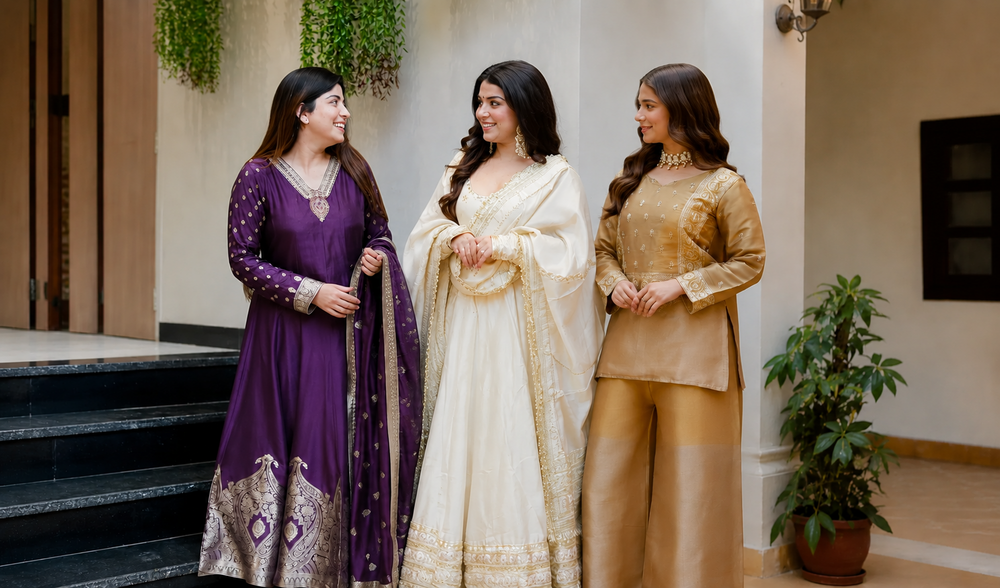
What Is Ethnic Wear? A Simple Guide to Indian Styles for Women
by Rushita Usadadiya
Indian fashion has a unique way of bringing tradition into everyday life. From cotton kurtas to festive sarees and contemporary co-ord sets, women's ethnic wear combines cultural heritage with modern comfort and style.
Today, ethnic wear is not limited to weddings or festivals. A simple kurta can work for the office, while a printed co-ord set can create an effortless look for a family gathering.
What Is Ethnic Wear?
Ethnic wear refers to clothing that reflects the cultural identity, heritage, and traditional craftsmanship of a particular region or community.
In simple terms, ethnic means connected to a culture or community, while wear means clothing worn on the body. So, ethnic wear refers to clothing that carries elements of a culture through its design, fabric, craft, print, silhouette, or way of wearing it.
In India, an ethnic dress is more than just a garment. It connects directly to community identity, local weather conditions, and traditional rituals.
Over the years, traditional styles have evolved. Today, designers mix classic elements with modern cuts. This has created fusion styles, such as tunic tops, pre-draped sarees, and short kurtas paired with jeans, giving a contemporary spin to traditional fashion.
A Brief History of Indian Ethnic Wear
Indian ethnic wear has evolved over thousands of years, shaped by regional traditions, climate, textiles, and cultural influences.
- Ancient India: Draped garments and cotton fabrics were widely used, forming the foundation of styles such as sarees and dhotis.
- Regional traditions: Different regions developed their own weaves, prints, embroidery, and clothing styles using local materials and techniques.
- Mughal influence: Persian and Central Asian influences introduced richer fabrics, stitched silhouettes, floral designs, and detailed embroidery into Indian fashion.
- Modern evolution: After independence, handloom and traditional crafts gained renewed attention, while designers began combining Indian craftsmanship with modern silhouettes.
Today, Indian ethnic wear blends heritage with modern fashion, making traditional fabrics, crafts, and silhouettes easy to wear for everyday life and special occasions.
Types of Ethnic Wear for Women
There are many types of ethnic wear for women, ranging from simple everyday outfits to elaborate wedding clothing.
The right choice usually depends on your comfort, occasion, fabric, and personal style.
1. Kurta Sets
Kurta sets are among the easiest forms of women's ethnic wear for everyday dressing. A kurta can have a straight, A line, or flared shape and may be paired with pants, palazzos, churidars, or a dupatta.
Cotton kurta sets work well for daily wear and office outfits, while embroidered or richer fabrics can be styled for festive occasions.
2. Salwar Kameez and Suit Sets
A salwar kameez traditionally includes a kameez, salwar, and dupatta.
It remains one of the most versatile ethnic outfits because it can be styled in many ways. A simple cotton suit can work for everyday use, while embroidered or silk versions can be suitable for celebrations.
3. Sarees
The saree is one of India's most iconic traditional garments. It is generally made from a long length of fabric that is wrapped and draped around the body, with regional variations in how it is worn.
Cotton sarees can be comfortable for everyday use, while silk, Banarasi, Chanderi, organza, and embellished sarees can create a more formal look.
4. Anarkali Suits
Anarkali suits feature a fitted or structured upper section with a flared lower portion.
The silhouette can range from simple knee length styles to dramatic floor length designs. Light anarkalis can work for daytime occasions, while embroidered versions are popular for festive events.
5. Sharara Sets
A sharara suit set usually combines a kurta with wide, flared trousers and may include a dupatta.
The wide leg shape gives the outfit a festive appearance while allowing plenty of movement, which is one reason shararas are popular for celebrations and dance focused events.
6. Ethnic Co Ord Sets
Ethnic co-ord sets bring Indian prints, fabrics, embroidery, or silhouettes into a matching top and bottom outfit.
They are especially useful when you want a coordinated look without spending too much time deciding which pieces go together. Modern ethnic co-ords can range from printed cotton sets to festive embroidered styles.
Ethnic Wear vs. Traditional Wear: What's the Difference?
The terms ethnic wear and traditional wear are often used in the same way, but they can have slightly different meanings in modern fashion.
|
Feature |
Ethnic Wear |
Traditional Wear |
|
Meaning |
Clothing rooted in or inspired by a culture, region, or heritage. |
Clothing closely associated with established cultural traditions. |
|
Design |
Can include contemporary interpretations and modern cuts. |
Usually stays closer to established historical forms. |
|
Styling |
Often adapted with modern accessories and casual silhouettes. |
Follows customary draping and traditional styling rules. |
|
Occasions |
Everyday wear, work, minor events, and celebrations. |
Religious ceremonies, temple rituals, and weddings. |
|
Examples |
Kurta sets, ethnic co-ords, fusion tunics. |
Regional bridal sarees, heavy ceremonial drapes. |
Indian Ethnic Wear Across Different Regions
Every Indian state brings its own unique flavor to traditional fashion.
- Gujarat: Known for bright Bandhani tie-dye prints, mirror work, and colorful Chaniya Cholis worn during Navratri.
- Rajasthan: Famous for Leheriya wave prints, Gota Patti golden applique work, and heavy cotton Ghagras.
- Punjab: Home to bright Phulkari thread embroidery and short kurtas paired with high-volume Patiala salwars.
- Uttar Pradesh: World-famous for delicate, white-on-white Lucknowi Chikankari hand embroidery on airy fabrics.
- Maharashtra: Known for rich Paithani silk sarees featuring peacock borders and classic Nauvari 9-yard drapes.
- West Bengal: Famous for woven Tant cotton sarees and iconic red-and-white border Garad sarees.
- South India: Celebrated for lustrous Kanjeevaram silk sarees, cream-and-gold Kasavu drapes, and traditional temple jewelry.
How to Style Ethnic Wear for Every Occasion
The right outfit and styling can make ethnic wear work for everyday wear, office days, festivals, and special occasions.
Daily Wear
Choose breathable cotton kurtas, short tunics, or ethnic co-ords with flats and minimal jewellery.
Office Wear
Opt for straight-cut suit sets, linen kurtas, or best A-line kurti design styles in subtle colours. Pair them with simple earrings and a structured bag.
Festivals
Choose vibrant kurta sets, shararas, or lightweight sarees in festive shades. Add juttis, statement earrings, or a neatly styled dupatta.
Puja & Religious Ceremonies
Go for comfortable cotton-silk or Chanderi suits in festive shades, styled with a neatly draped dupatta and minimal jewellery.
Weddings
Choose embroidered lehengas, Anarkalis, or Banarasi sarees with Kundan or Polki jewellery and embellished footwear.
Parties
Try Indo-Western dresses, skirt sets, or embroidered co-ords with statement accessories for a contemporary look.
Modern Styling Tips
- Footwear: Pair ethnic outfits with juttis for a traditional look or sneakers for a fusion touch.
- Dupatta: Try scarf-style, one-shoulder, or belted drapes.
- Layering: Add an ethnic jacket, cape, or denim jacket.
- Mix & Match: Pair short kurtas with wide-leg trousers or sarees with modern blouses.
- Accessories: Keep casual looks minimal and let statement jewellery complement festive outfits.
How to Choose the Right Ethnic Wear
Here is a quick checklist to help you pick the perfect piece every time you shop:
- Match the Occasion: Choose lightweight prints for casual events and heavy embroideries for formal functions.
- Pick the Right Fabric: Prioritize natural cottons for warm weather and heavy silks or velvets for winter events.
- Prioritize Comfort: Make sure the outfit allows easy arm movement, has a comfortable waistband, and includes a soft lining.
- Select a Flattering Fit: Choose a silhouette that fits comfortably and complements your preferred style.
- Consider the Time of Day: Wear light pastels for daytime events and rich jewel tones for evening celebrations.
- Balance Your Budget: Invest more in versatile pieces you can wear repeatedly, like solid kurtas or classic sarees.
Popular Fabrics Used in Indian Ethnic Wear
The fabric you choose affects how an outfit looks, drapes, and feels throughout the day.
|
Fabric |
Best Suited For |
Key Features |
|
Cotton |
Daily Wear, Work |
Ultra-breathable, soft, skin-friendly |
|
Silk |
Weddings, Grand Parties |
Rich sheen, smooth drape, durable |
|
Georgette |
Festive Events, Evening Parties |
Lightweight, flowy, easy to wear |
|
Chanderi |
Pujas, Semi-Formal Events |
Sheer texture, subtle luster, lightweight |
|
Organza |
Contemporary Parties, Receptions |
Crisp structure, romantic sheen, modern look |
Why Is Ethnic Wear Still Popular Today?
Indian ethnic wear remains popular because it combines culture, comfort, and versatile style.
- Cultural Connection: Keeps Indian heritage and traditions alive through festivals, weddings, and family occasions.
- Everyday Comfort: Breathable fabrics and relaxed silhouettes make it suitable for India's warm climate.
- Versatility: Kurtas, co-ords, and sarees can be styled in different ways for multiple occasions.
- Modern Styles: Pre-stitched sarees, co-ords, and contemporary kurtas make ethnic fashion easy to wear.
- Supports Craftsmanship: Choosing Indian ethnic wear helps preserve traditional handlooms, embroidery, and artisan crafts.
FAQs
-
What is the meaning of ethnic wear?
Ethnic wear refers to clothing deeply rooted in the culture, heritage, and traditions of a specific region or country. In India, it includes outfits like Sarees, Kurtas, Salwar Suits, and Lehengas.
-
Can I wear ethnic attire for daily work?
Yes. Straight-cut cotton kurtas, simple kurta sets, palazzo sets, and subtle co-ords can work well for office wear. Choose breathable fabrics, comfortable fits, and minimal prints or embellishments for a polished professional look.
-
How is ethnic wear different from modern Western wear?
Ethnic wear is inspired by regional Indian craftsmanship, fabrics, motifs, and silhouettes, while Western wear generally follows Western fashion styles and tailoring.
-
What should I check before buying ethnic wear online?
Before buying ethnic wear online, check the fabric, size chart, garment measurements, product details, lining, and care instructions to ensure the outfit is comfortable, well-fitted, and suitable for long events.
-
How do I know which ethnic wear will suit me?
It depends on your preferred fit, comfort, body proportions, and personal style. Different silhouettes can create different looks, so choose an outfit that fits well, feels comfortable, and makes you feel confident and stylish.